As infrastructure projects grow in scale and complexity, so too does the need to build them sustainably. This is especially important in large-scale tunnelling operations, where effective water management plays a vital role in minimising environmental impact and supporting sustainable construction practices. On the Western Harbour Tunnel project in Sydney, ACCIONA partnered with SciDev to design and build an advanced water treatment system that could help meet ambitious sustainability targets while reducing the project’s overall environmental footprint.
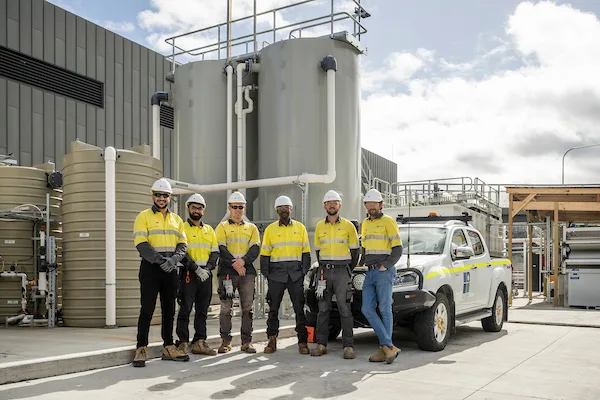
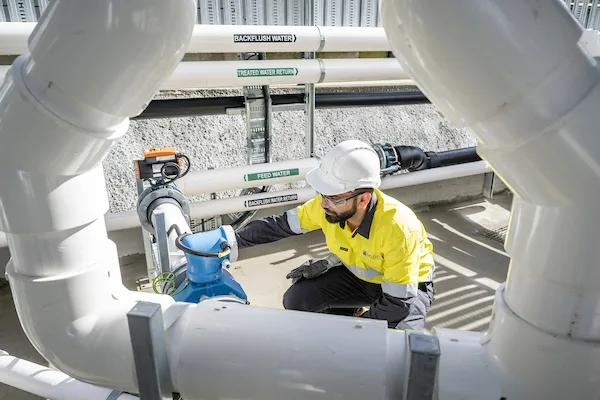
The NSW Government’s Western Harbour Tunnel project involves the construction of a 6.5km dual three-lane tunnel under Sydney Harbour, generating significant volumes of groundwater along the way. The groundwater from the tunnelling work is directed to one of three temporary Water Treatment Plants (WTP) designed, built and commissioned by SciDev. To manage the volume of water needed for this project, three WTPs are required – two at the northern tunnel portal and one at the southern tunnel portals.
Sustainably Engineered
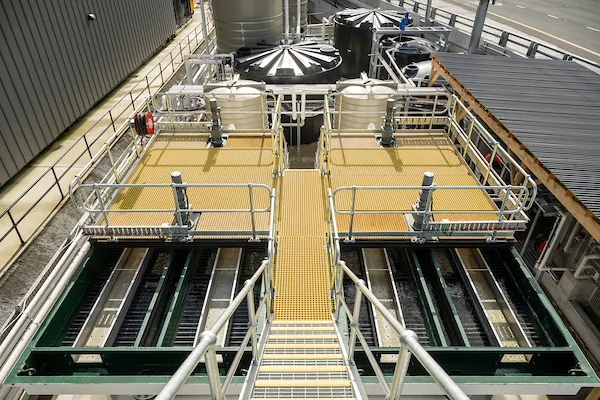
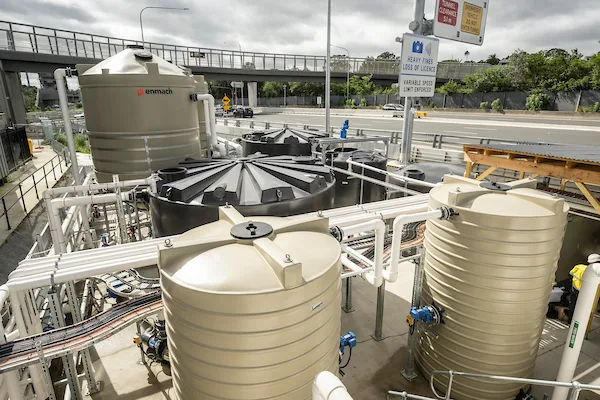
The cutting-edge WTPs were specifically engineered to manage and treat the large volumes of water generated throughout tunnel excavation. From rainwater and stormwater to groundwater and construction wastewater, all water sources are captured, treated, and, where possible, reused on site. This approach was driven by the project’s broader goals to achieve a leading infrastructure sustainability rating.
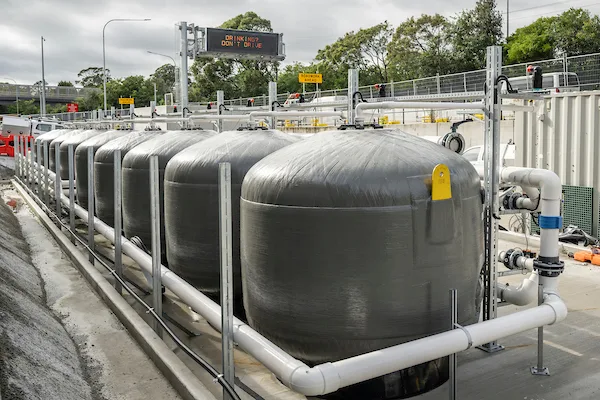
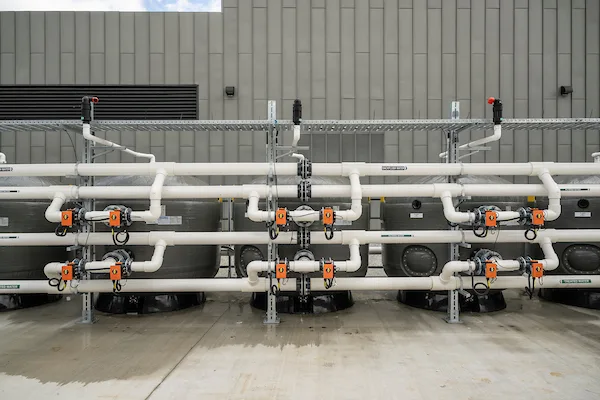
The WTPs are designed to run 24 hours a day, seven days a week, treating 35 litres of water per second at the southern portal, and 15 litres per second at the two northern WTPs. The water undergoes a sophisticated, multi-stage treatment process involving sedimentation, clarification, granular filtration, chlorination, activated carbon polishing, nitrate removal, and solids handling. The use of SciDev’s MaxiFlox® for chemical conditioning ensures effective treatment even in highly variable conditions.
Existing site assets, including the filter press and associated equipment, were modified and integrated into the new treatment system. This not only reduced capital expenditure but also supported the project’s sustainability goals by avoiding unnecessary waste and resource consumption.
Supporting The Circular Economy
What makes this approach to water management so impactful is its ability to support a circular water strategy. Once treated, the water is reused across the construction site for dust suppression in tunnels, wheel wash stations, and in the site workshops. This minimises reliance and impact on local water resources—critical in a region increasingly affected by the consequences of climate change.
Temporary detention tanks and impermeable bunds offer additional flexibility during excavation. If water can’t be immediately treated, it’s stored safely so that excavation can proceed without delay. Real-time monitoring systems and automated controls ensure strict compliance with Environmental Protection Licence thresholds, providing peace of mind that treated water meets regulatory standards before being reused or discharged back to the environment.
Automation for simplicity
A key feature of the WTP is its high level of automation. Designed with minimal manual intervention in mind, the system includes automated chemical dosing, self-regulating backwash cycles, and real-time water quality monitoring. These features ensure continuous, reliable operation and rapid response to any fluctuations in water quality, without requiring constant operator oversight.
Once the system was fully commissioned, it was handed over to the construction team, who were trained to manage day-to-day operations for the duration of the project. The automation of the system made this transition and training simple for the incoming team.
A sustainable approach to water management
The Western Harbour Tunnel project’s approach to water treatment demonstrates what’s possible when sustainability is embedded from the outset. On this project, water is treated with respect, as a valuable resource rather than a waste product. The legacy being built here is not just a tunnel—it’s a blueprint for how infrastructure can be delivered responsibly, with minimal environmental disruption and long-term community benefit.