Highlights
- Avoided plant shutdown by restoring dam capacity below the mandatory reporting level
- Rapid water recovery from the dewatering cell, enabling reuse on-site
- MaxiFlox® achieved effective settling at 50% of the expected flocculant dose, reducing chemical costs
- Reliable operation under fluctuating solids and flow conditions
- Fully independent, solar-powered dosing system suitable for remote, off-grid locations
Achieving Regulatory Compliance Ahead of the Rainy Season
The mine faced a critical challenge where the site-runoff dam had gradually filled with silt over the years, reducing its effective storage capacity below the dam’s mandatory reporting level. Accumulated fine sediments reduced both free water volume and the dam’s ability to safely capture runoff. With the rainy season approaching, the client was under pressure from regulators to ensure the dam could safely collect water during rain events. The site operators were required to act immediately to avoid risking a shutdown of the mine.
MaxiFlox® – A Superior Dewatering Solution
The goal was to dredge the dam before the wet season began, ensuring both regulatory compliance and operational continuity. To address this, the client made the strategic decision to dredge the dam by constructing a new dewatering cell and implementing a secondary flocculation technique, which rapidly settles the dredged solids and recovers water. The capability to rapidly settle the transferred, dredged solids meant that the cell could be filled quickly prior to the rainy season starting. The cell could then be capped and rehabilitated at a later date. SciDev was engaged to deliver a solution that could operate sustainably in a remote location, provide rapid sedimentation, and support water recovery efforts.
Following extensive comparative testing across multiple flocculant suppliers, MaxiFlox® was selected for its superior dewatering performance at significantly lower dose rates.
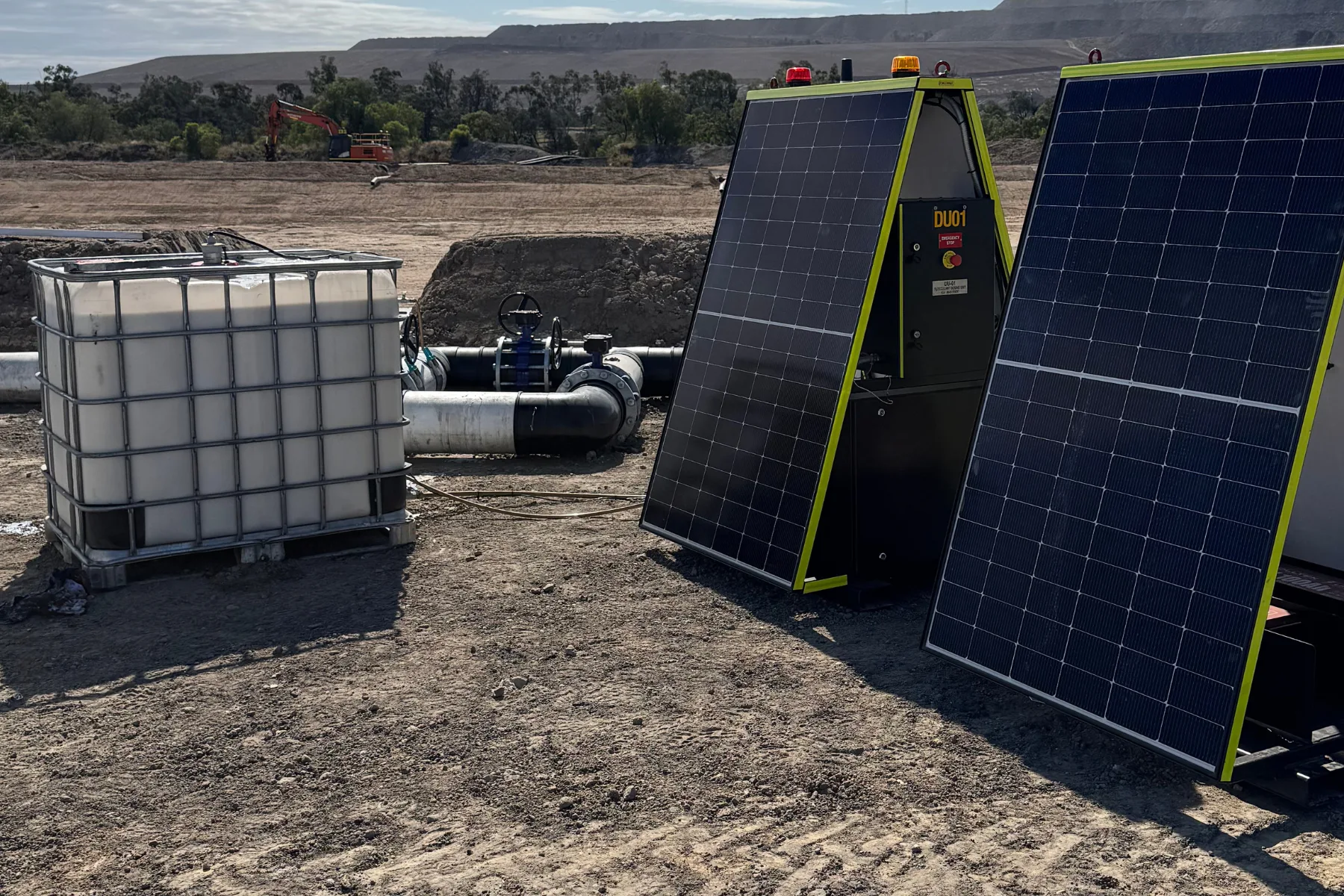
Following extensive comparative testing across multiple flocculant suppliers, Barion selected MaxiFlox® for its superior dewatering performance at significantly lower dose rates. The solution centred on the use of MaxiFlox® dosed neat via Barion’s solar-powered dosing system. The off-grid dosing configuration enabled precise, low-maintenance chemical delivery suited to the site’s operating environment. While laboratory testing defined the optimal dose, field performance demonstrated effective settling at approximately half this rate.
While laboratory testing defined the optimal dose, field performance demonstrated effective settling at approximately half this rate.
MaxiFlox® was injected neat, 25–100 metres upstream of the sump discharge point, allowing sufficient time for polymer activation and floc formation. Settling occurred within 15–20 seconds, and within several days of operation, the dredged solids formed a stable beach. This “beaching” effect increased the storage capacity and enhanced water recovery, as clarified water drained from the beach and was able to be recovered and reused. The product’s broad dose rate flexibility supported a steady state dosing strategy, minimising the need for frequent operator adjustments. Coordination between the dosing and dredging teams ensured flocculant was only applied when solids were present, while an in-line pressure switch prevented dosing into inactive slurry lines.
Restoring Capacity to the Dam
Dam capacity was restored below the mandatory reporting level ahead of the wet season, eliminating the risk of regulatory shutdown. The rapid separation of dredged solids and water enabled the dewatering cell to operate effectively within its design parameters. Water clarity from the runoff exceeded that of the original source, making it suitable for reuse in dust suppression and the processing plant.
The project also delivered significant sustainability benefits, including reduced bore water imports and energy savings from the use of solar-powered equipment.
The combination of SciDev’s MaxiFlox® chemistry and Barion’s solar-powered dosing units demonstrates a proven approach for other mining operations seeking to rapidly dewater tailings underflow streams or recover dam capacity via dredging operations.